VISUALIZZA PAGINA SU PC

Scheda completa della pianta

DISCLAIMER   AUTOMEDICAZIONE   © COPYRIGHT
QUESTA SCHEDA È UNICA E ORIGINALE IN INTERNET
aggiornamento del 02/12/2025

SPINCERVINO
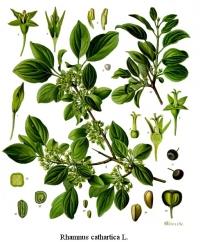
Rhamnus cathartica L.
LEGGI ARTICOLI SCIENTIFICI


TOSSICITÀ ALTA *
gif tossicità
EFFICACIA NON UTILIZZABILE

 Noo 

SCHEDA BOTANICA


COLORI OSSERVATI NEI FIORI

____ GIALLO-VERDASTRO
____ GIALLOGNOLO


DISTRIBUZIONE IN BASE
ALLE OSSERVAZIONI UMANE


© OpenStreetMap contributors, © OpenMapTiles, GBIF (CC BY-SA 2.0)

SCHEDA FITOTERAPIA


  • Con evidenze scientifiche
  • ookNON UTILIZZABILE IN AUTOTERAPIA
  • Uso storico e nella tradizione
  • NooLASSATIVO PURGANTE ANTRACHINONICO (INTESTINO CRASSO)
    NooLASSATIVO PURGANTE DRASTICO
    NooSTITICHEZZA O STIPSI


    Antagonismi e Effetti Indesiderati tra SPINCERVINO e altre piante non rilevati o non ancora ampiamente documentati


    Vedi sul web gli studi sulle proprietà antitumorali per Rhamnus cathartica L.

    SCHEDA NOTIZIE E VARIE


    ...in aggiornamento

    BIBLIOGRAFIA e WEBLIOGRAFIA GENERALE

    • Westendorf, J., et al. (1990). Anthranoid derivatives in Rhamnus cathartica L. Planta Medica, 56(3), 295-298. DOI:10.1055/s-2006-960976

    • Mabberley, D.J. (2017). Mabberley's Plant-Book (4th ed.). Cambridge University Press. (Descrizione botanica e usi tradizionali)

    • Kosalec, I., et al. (2009). Antimicrobial activity of Rhamnus cathartica L. Phytotherapy Research, 23(4), 525-529. DOI:10.1002/ptr.2663

    • Valentão, P., et al. (2003). Antioxidant activity of Rhamnus cathartica L. extracts. Journal of Agricultural and Food Chemistry, 51(18), 5215-5219. DOI:10.1021/jf0344335

    • European Medicines Agency (EMA) (2018). Assessment report on Rhamnus cathartica L., fructus. EMA/HMPC/611041/2017

    • Müller, K., & Ziereis, K. (1994). The antipsoriatic anthrone tacalcitol. Journal of Ethnopharmacology, 41(1-2), 1-7. DOI:10.1016/0378-8741(94)90049-3

    • Speranza, G., et al. (2005). Bioactive metabolites from Rhamnus species. Phytochemistry Reviews, 4(1), 55-64. DOI:10.1007/s11101-005-1259-9